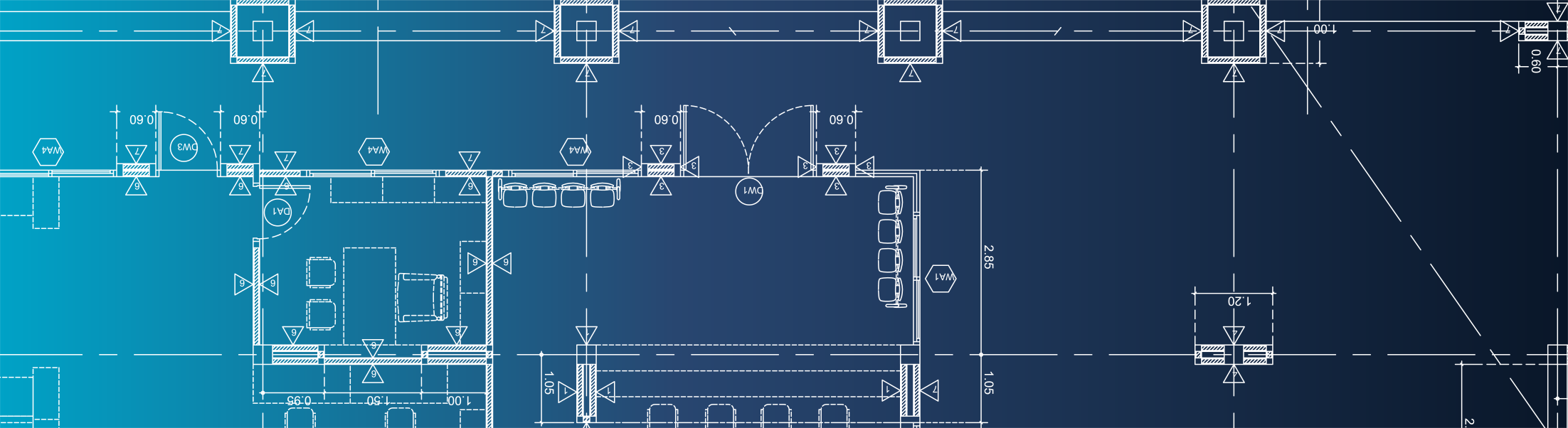



Optimising Your Food Factory Layout: Key Considerations for Efficiency and Safety
When it comes to food production, the layout of your factory plays a pivotal role in ensuring both operational efficiency and product quality. A poorly planned food factory layout can lead to unnecessary delays, wasted time, and increased costs. Every disruption, no matter how small, compromises both productivity and product quality. In this article, we’ll walk you through key considerations to optimise your food factory layout — from Goods In to Goods Out and everything in between.

Goods In: The Starting Point of Production
The location of your Goods In area is a fundamental consideration in the design of your factory. Ideally, this should be positioned at the edge of the building to allow for easy access by delivery vehicles. One common challenge at this stage is ensuring that delivery vehicles can move freely without causing congestion. A practical solution to this issue is the introduction of a “ring road” around the factory. This allows traffic to flow more smoothly, making the delivery and receipt of materials more efficient.
In an optimised layout, the goal is to create a linear plant, meaning that goods should flow seamlessly from one stage to the next with minimal delays. Let’s explore how this can be achieved through each key stage of production.
Raw Materials Storage: Proximity is Key
Materials that are not immediately required in production should be stored in a Raw Materials Storage area. Whether ambient or cold storage, the ideal location for this area is as close to the Goods In section as possible. This reduces the time and labour required to move materials from one place to another, improving overall efficiency and reducing costs.
By limiting the time and number of employees involved in material transfers, you can optimise productivity and maintain high profit margins.
 .
.

Production Area: The Heart of the Facility
The production area is the central hub of any food factory and should therefore be placed at the core of the layout. The aim here is to ensure a smooth, continuous flow from raw materials to finished product, with minimal backtracking or unnecessary movement between departments.
While the concept of a “linear plant” is ideal, it’s important to note that a factory layout doesn’t need to be a literal straight line. However, the principle remains: goods should not need to pass through another department or stage of production unnecessarily.
Packing & Palletising: Streamlining the End-of-Line Process
In a well-designed food production facility, packing and palletising should take place in the same area. Having separate packing and palletising stations wastes time and resources. Ideally, automation plays a key role here: products should go straight from the production line into boxes, which are then automatically loaded onto pallets and shrink-wrapped.
Automation not only improves efficiency but also plays a crucial role in preventing contamination by minimising human contact with the products during these processes.


Finished Product Storage: Managing Product Flow
In an ideal production facility, the design would minimise the need for finished product storage, thanks to newer technologies. However, not all scenarios are ideal. An effective ERP system (such as IFS Applications) can collect real-time data to produce an efficient schedule, allowing manufactured products to move directly from the production line to Goods Out and, ultimately, out the door.
When storage is necessary, the Finished Product Storage area should be located between the Packing and Palletising and Goods Out areas. This ensures a smooth transition and maintains an optimised flow of goods through the facility. By keeping the storage area close to these sections, you reduce the time spent handling the product and improve overall throughput.
Goods Out: Easy Access for Distribution
The Goods Out area should be designed to mirror the Goods In area, with easy access for outbound logistics. This facilitates the smooth transition of finished products to delivery vehicles, helping to maintain a steady flow of goods and preventing delays in the distribution process.
Non-Production Related Departments: Strategic Placement
While administrative and maintenance & engineering departments may not be directly involved in production, their strategic placement is just as important for maintaining operational flow and ensuring food safety.

Administrative Offices: Maintaining Food Safety
In a well-optimised factory, administrative offices should be placed away from high-risk production areas to prevent contamination. Departments such as Goods In, Goods Out, Production, and Maintenance & Engineering should each have their own designated office space. This separation helps safeguard food safety and ensures compliance with hygiene standards.

Maintenance & Engineering: Central Access for Quick Response
The Maintenance & Engineering department should be centrally located to allow easy access to every part of the facility. This ensures that maintenance personnel can quickly reach and address any issues without having to traverse production areas unnecessarily.
If technicians are required to travel through raw food areas to access finished product areas, the risk of contamination increases, along with the time spent sanitising and donning personal protective equipment (PPE). To minimise these risks, it’s best to position the maintenance department between the raw materials and finished product areas for swift and safe access.
The Benefits of an Optimised Food Factory Layout
An optimised food factory layout can lead to significant improvements in both productivity and product quality. By reducing time and labour waste, minimising the risk of contamination, and improving flow between departments, you not only streamline your operations but also increase profitability.
At FSC, we have extensive experience in designing and delivering efficient and optimised food factory fitouts. Whether you’re looking to optimise your existing facility or design a new one from the ground up, we can help you create a layout that maximises productivity, food safety, and overall operational efficiency.
Contact us today to begin your factory optimisation journey!
An example of an optimised food factory layout. Production flows across the facility and maximises productivity. Click here to download.